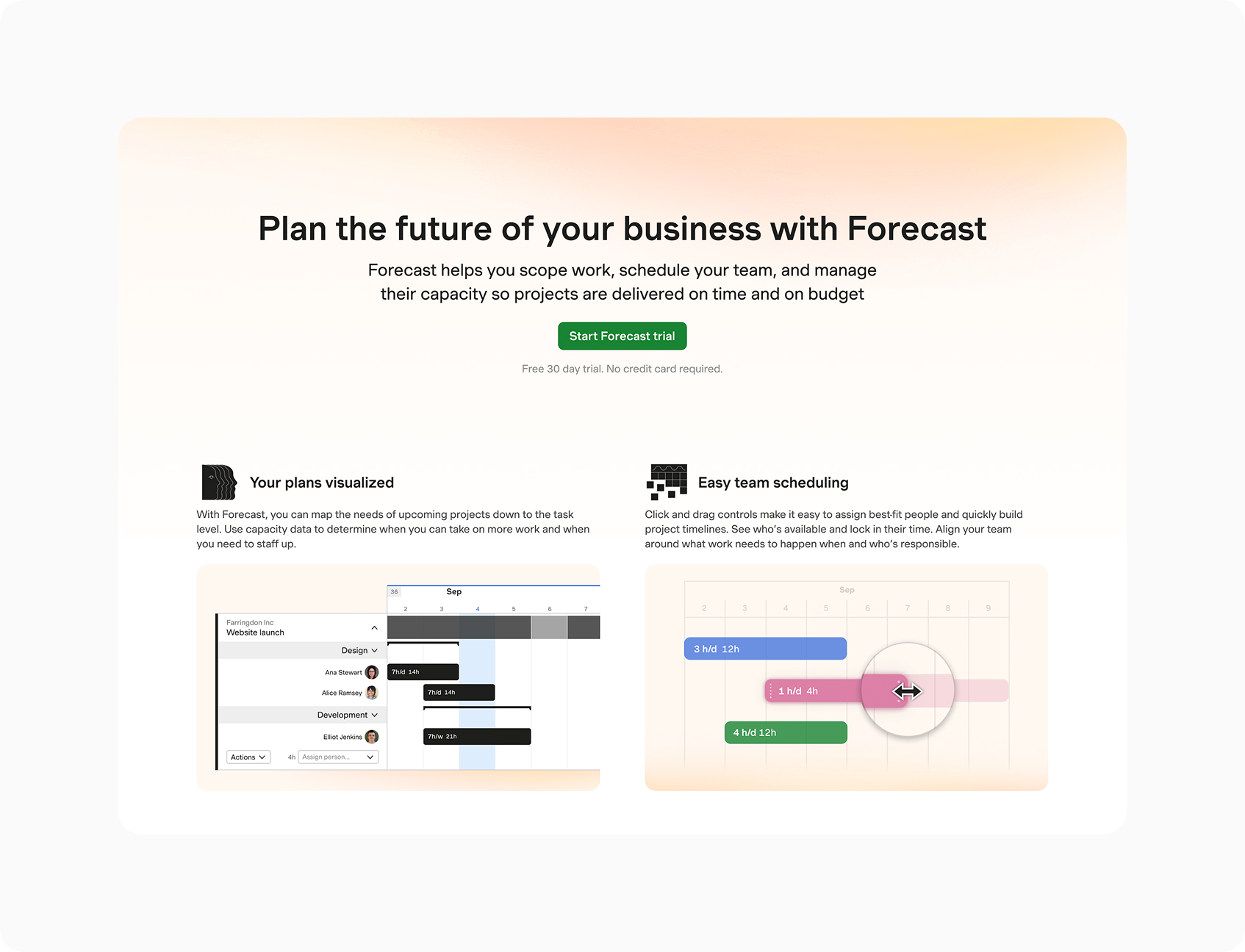
Connecting Forecast to Harvest
This project involved enhancing Forecast, a work planning tool by Harvest, to support task-based assignments. The feature was built for project managers and planners who needed more granular control and flexibility in scheduling work.
As the sole Product Designer, I was responsible for the full design lifecycle; from research, design, and prototyping to stakeholder alignment, QA, and marketing design. The initiative aimed to improve adoption and retention by addressing one of Forecast's most requested features while preserving a seamless user experience across different planning views.
This project led to rapid user adoption, with 22% of paid accounts using the new task feature within a week of launch. It also contributed to a 30% reduction in churn and a 3% increase in Forecast adoption among Harvest customers.
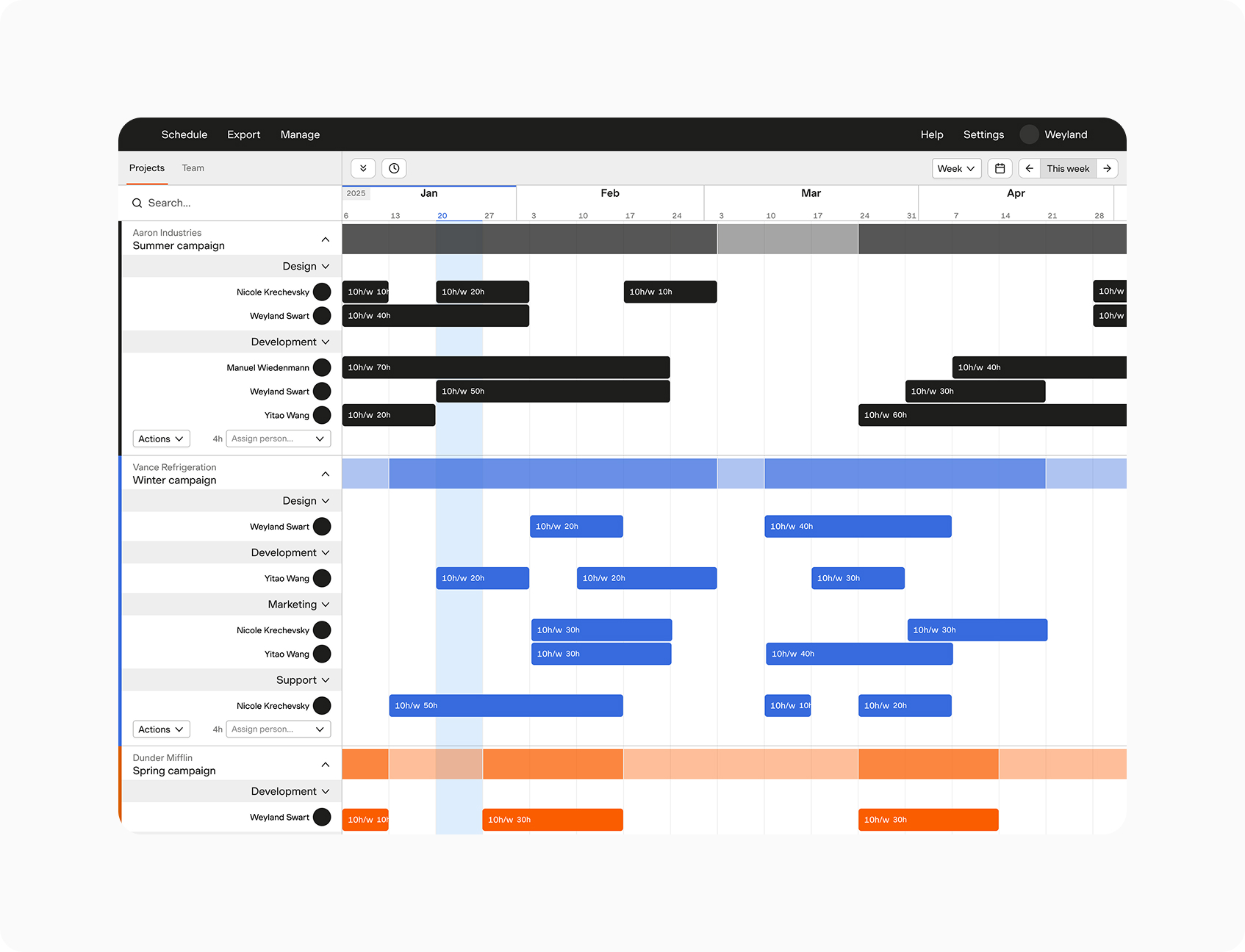
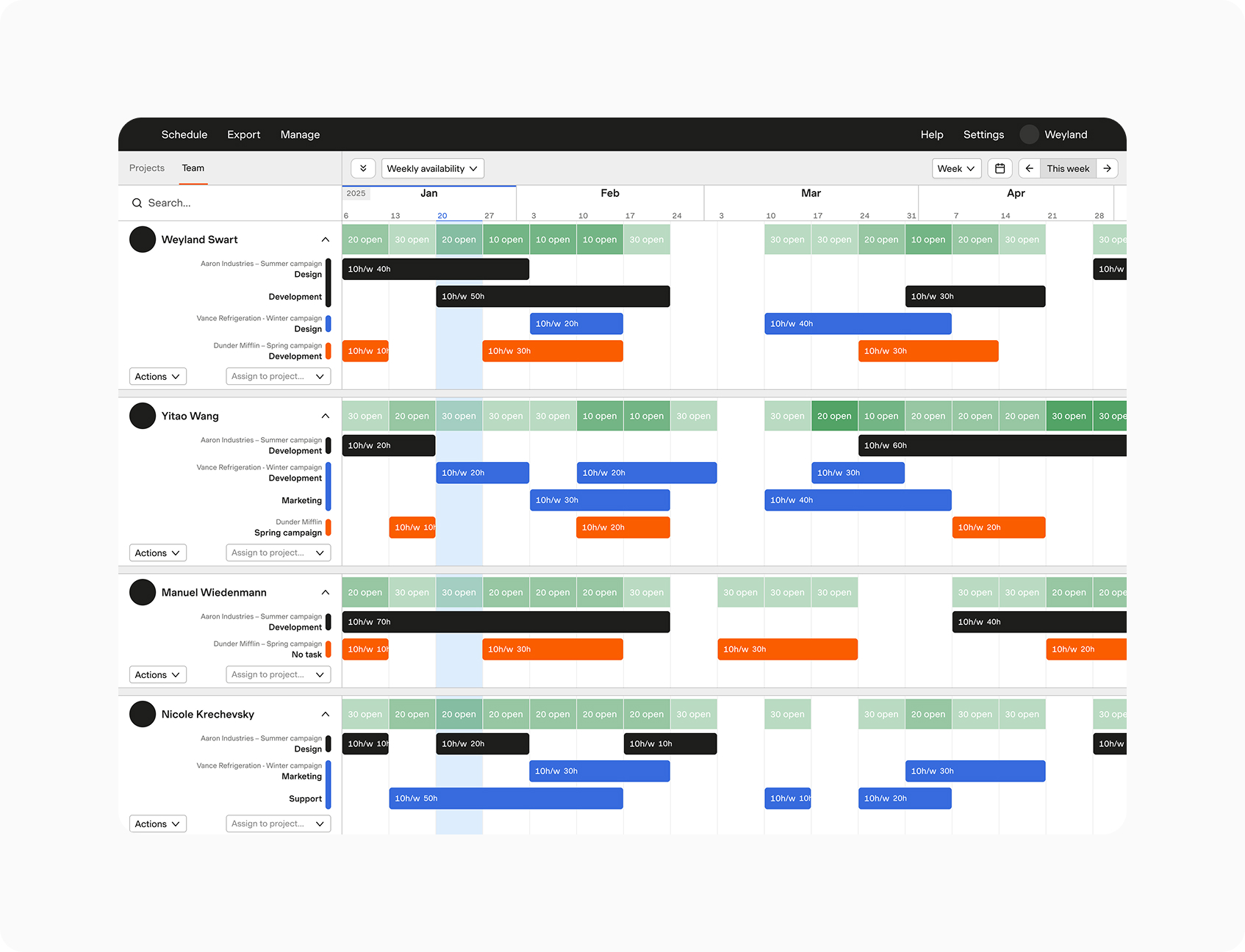
Forecast users had long expressed frustration with the platform's lack of task-level planning. Since its launch in 2014, one of the most consistent and highly requested features was the ability to associate tasks with assignments - especially since Harvest, the parent product, uses tasks extensively. Without this functionality, users had limited granularity in planning, and managing overlapping assignments was often clunky or impossible. This gap not only affected user workflows but also risked driving users toward alternative tools.
On the business side, Forecast had not seen active development in years, which correlated with stagnation in usage and increased churn. Reviving the product presented an opportunity to deliver long-awaited value, re-engage existing users, and grow adoption across the Harvest ecosystem by finally connecting task-level planning between the two platforms.
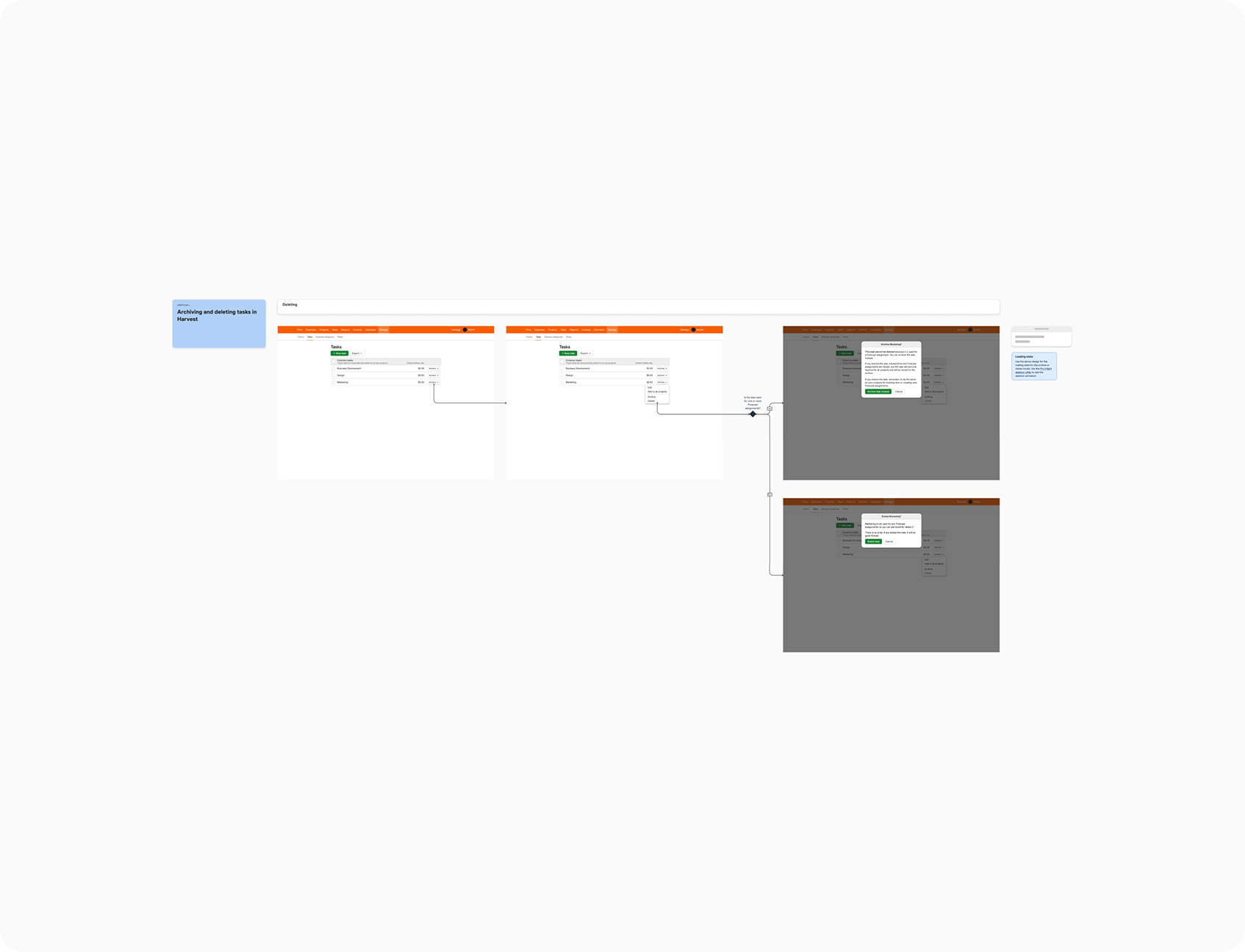
The primary goals were to support task-based scheduling within Forecast without introducing a separate task management system. Tasks needed to work seamlessly across both the team and project views while preserving Forecast's lightweight experience. Success was defined by increased adoption of the task feature, positive user feedback, and improved product retention - all without requiring additional onboarding or user education.
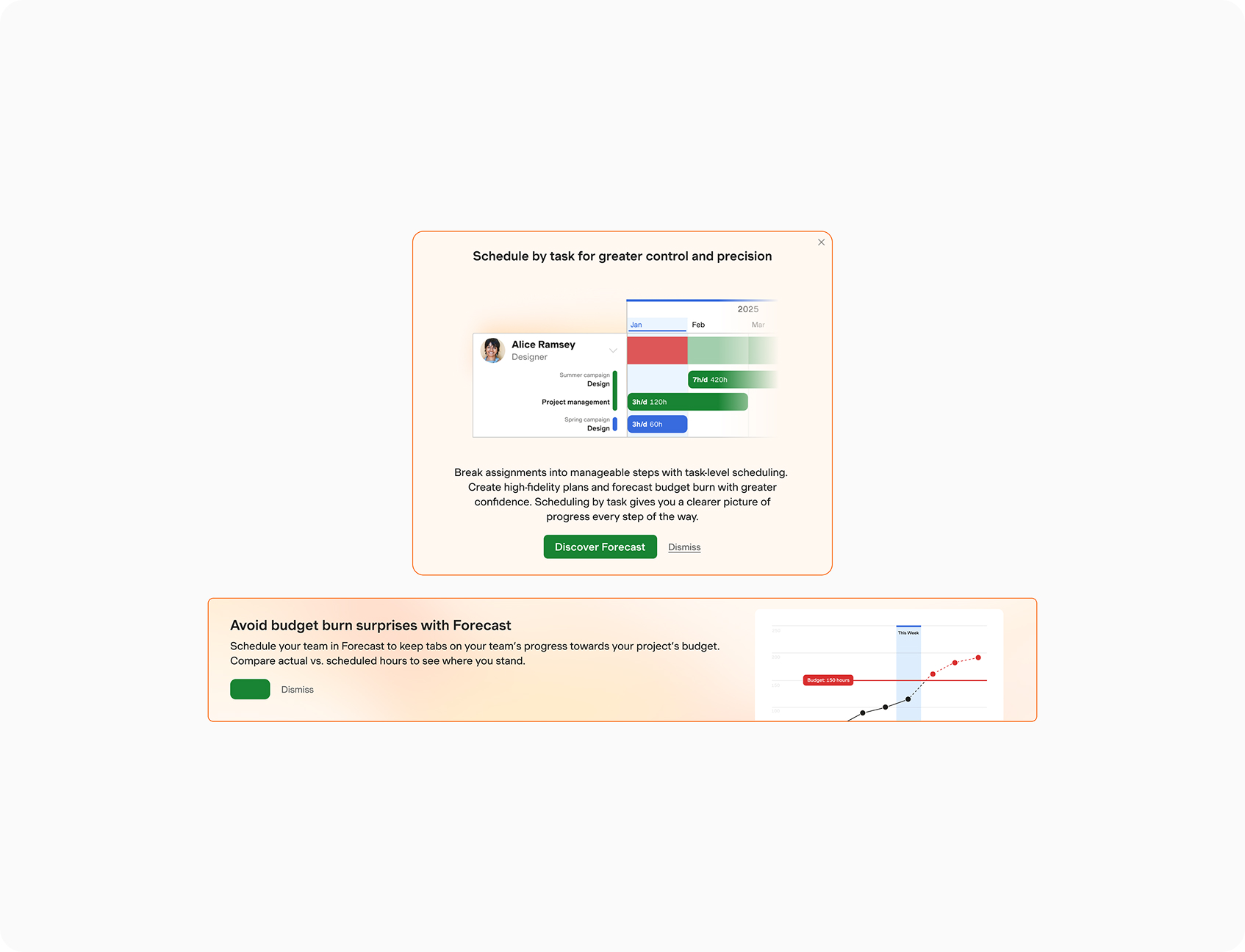
1. Discovery and research
I started the project with competitor analysis and user interviews to understand how other tools handled task-level planning and what users truly needed from this functionality. Early prototypes were shared directly with users to gather actionable feedback.
2. Definition and scoping
The team scoped an MVP based on feasibility, user value, and integration complexity. A phased rollout was planned, starting with basic task assignments and expanding to include additional functionality.
3. Ideation and prototyping
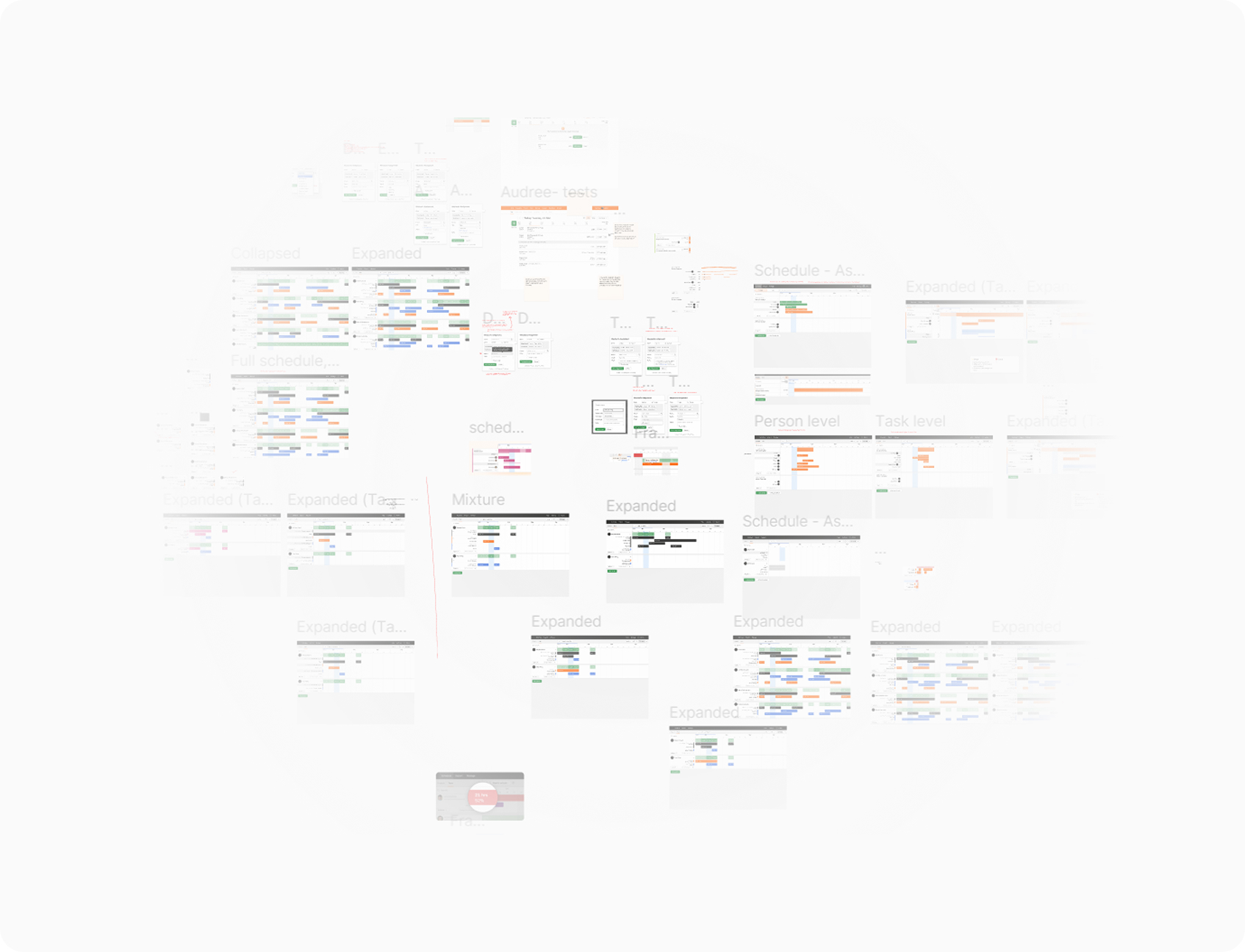
Multiple approaches were explored to determine how tasks should appear in Forecast's interface. Because Forecast has both a team view and a project view - with different visual treatments - each design option had to be flexible and intuitive across both contexts. I shared and tested alternatives internally and with users, iterating based on feedback.
Designs were created and refined in Figma. I built high-fidelity prototypes simulating real workflows, which enabled us to validate interactions and edge cases early on.
4. Iteration and validation
Usability testing confirmed that the task feature blended seamlessly into Forecast's interface. Minor changes were made to better support mixed-use scenarios (task-based and non-task-based planning within the same account). Design iterations focused on minimizing visual noise while emphasizing usability.
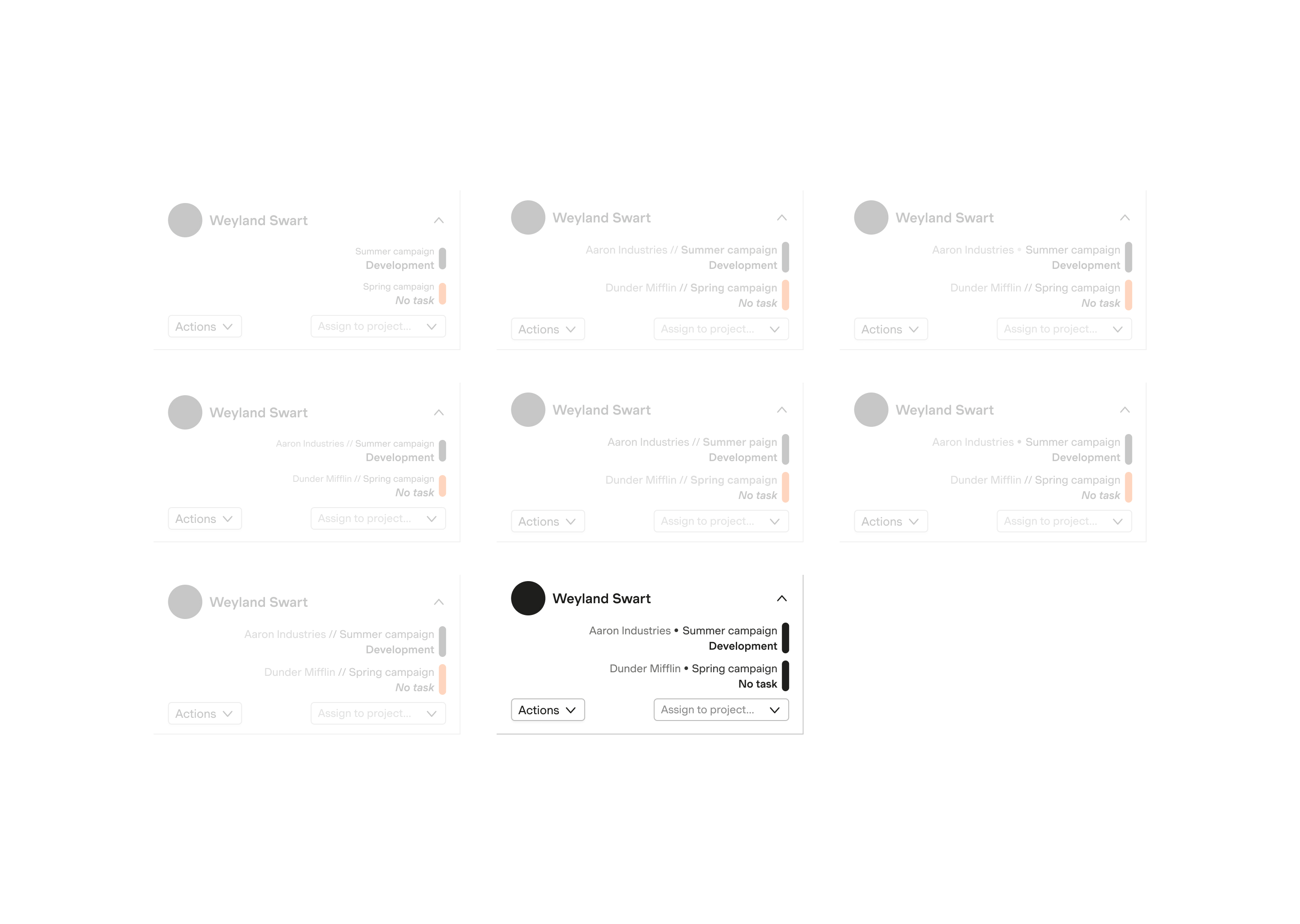
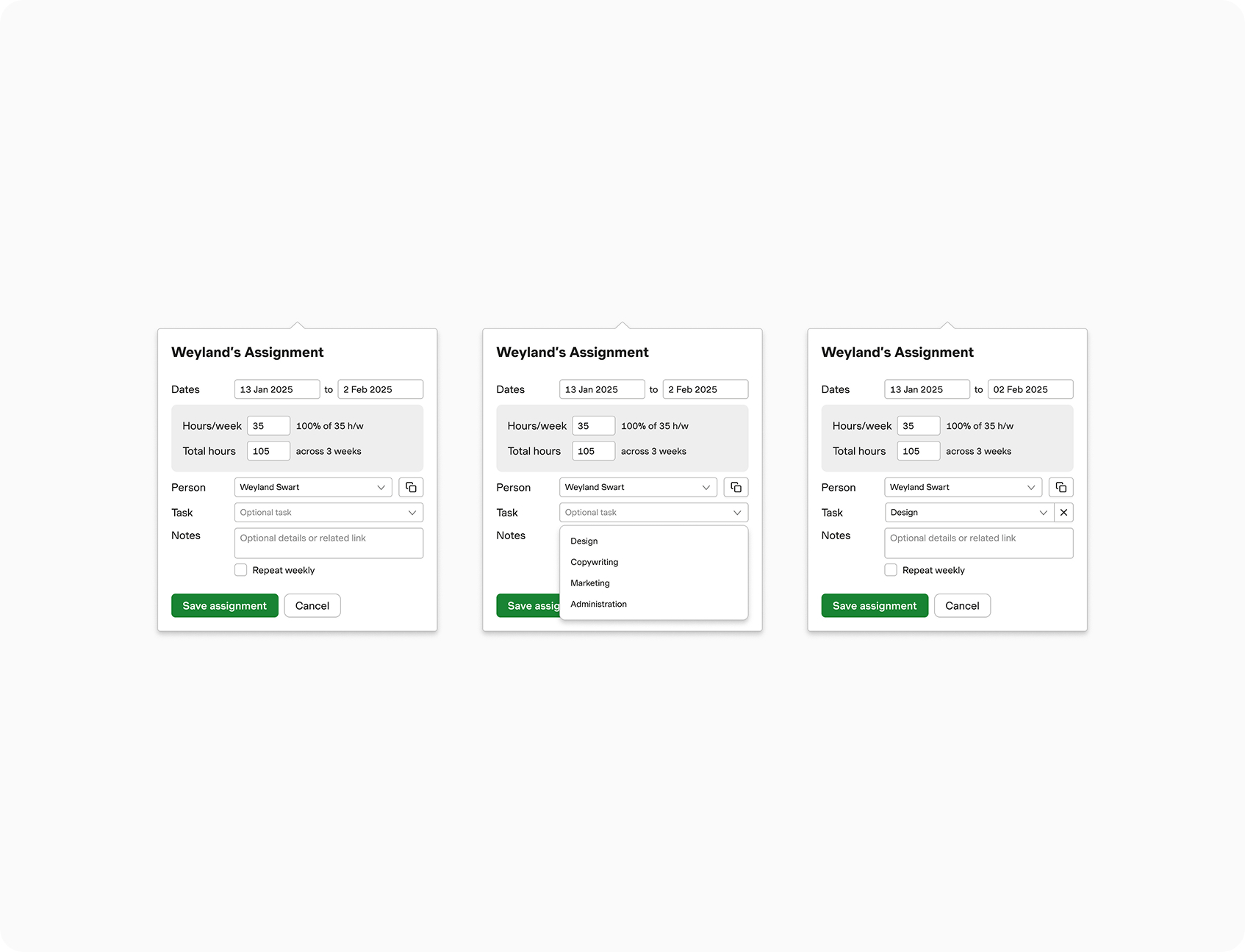
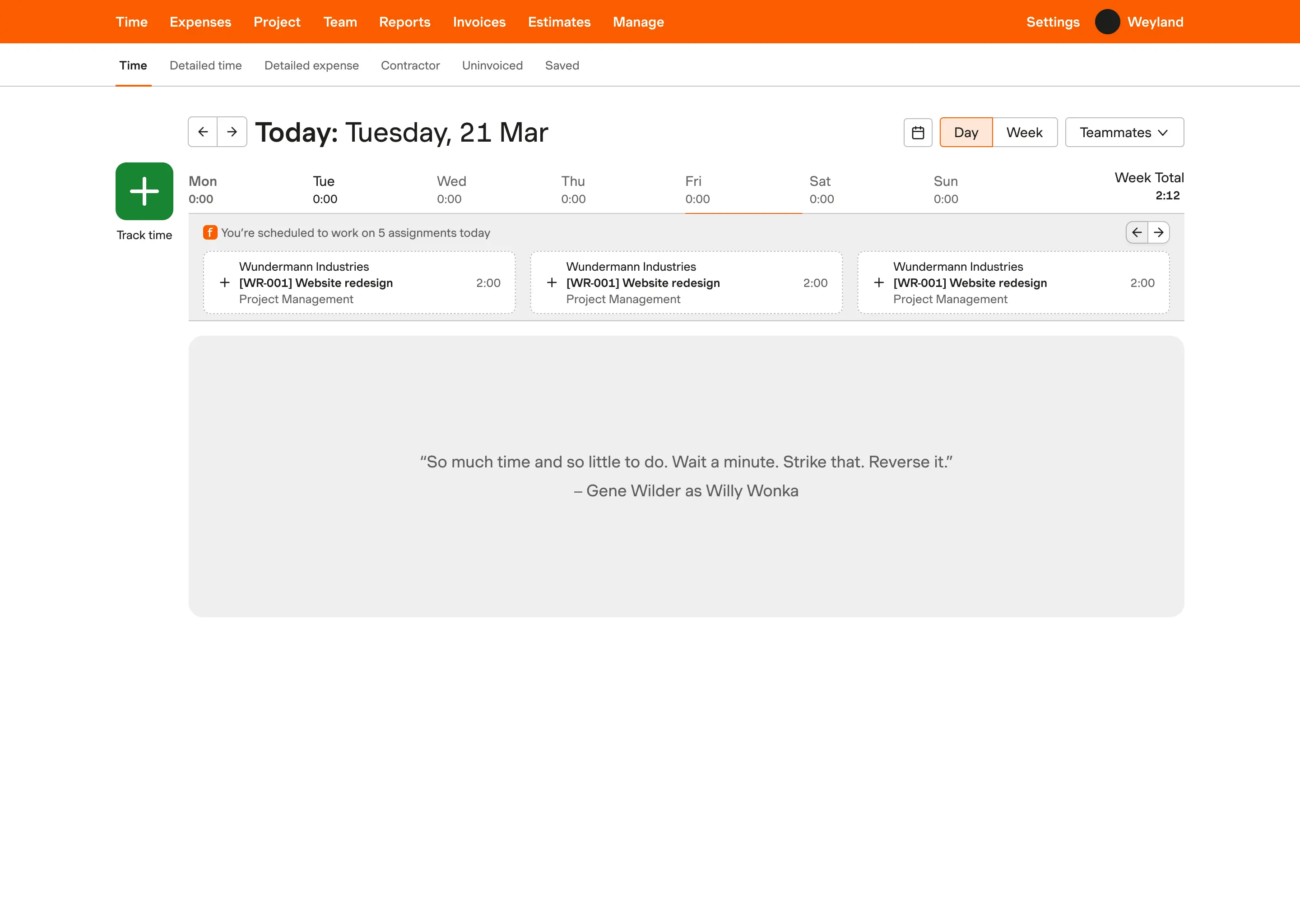
The final implementation introduced an optional task field within the assignment popover. When a task is selected, the schedule UI dynamically augments to display a task section - visually distinct in both the project and team views. For users who didn't need task-level granularity, the interface remained clean and familiar.
The solution allowed for "task rows" to create assignments more efficiently and laid the groundwork for future features like task-level budgets and suggested time entries in Harvest. The interaction design was deliberately subtle, ensuring the experience felt natural to new and existing users alike.
The feature was quickly and enthusiastically adopted: 22% of paid accounts used task assignments within a week of launch. Among those, 35% created multiple task assignments within the first 7 days.
Task-level planning, amongst other features that we launched at the time, contributed to a 30% reduction in churn for Forecast and led to a 3% increase in Forecast adoption among existing Harvest customers.
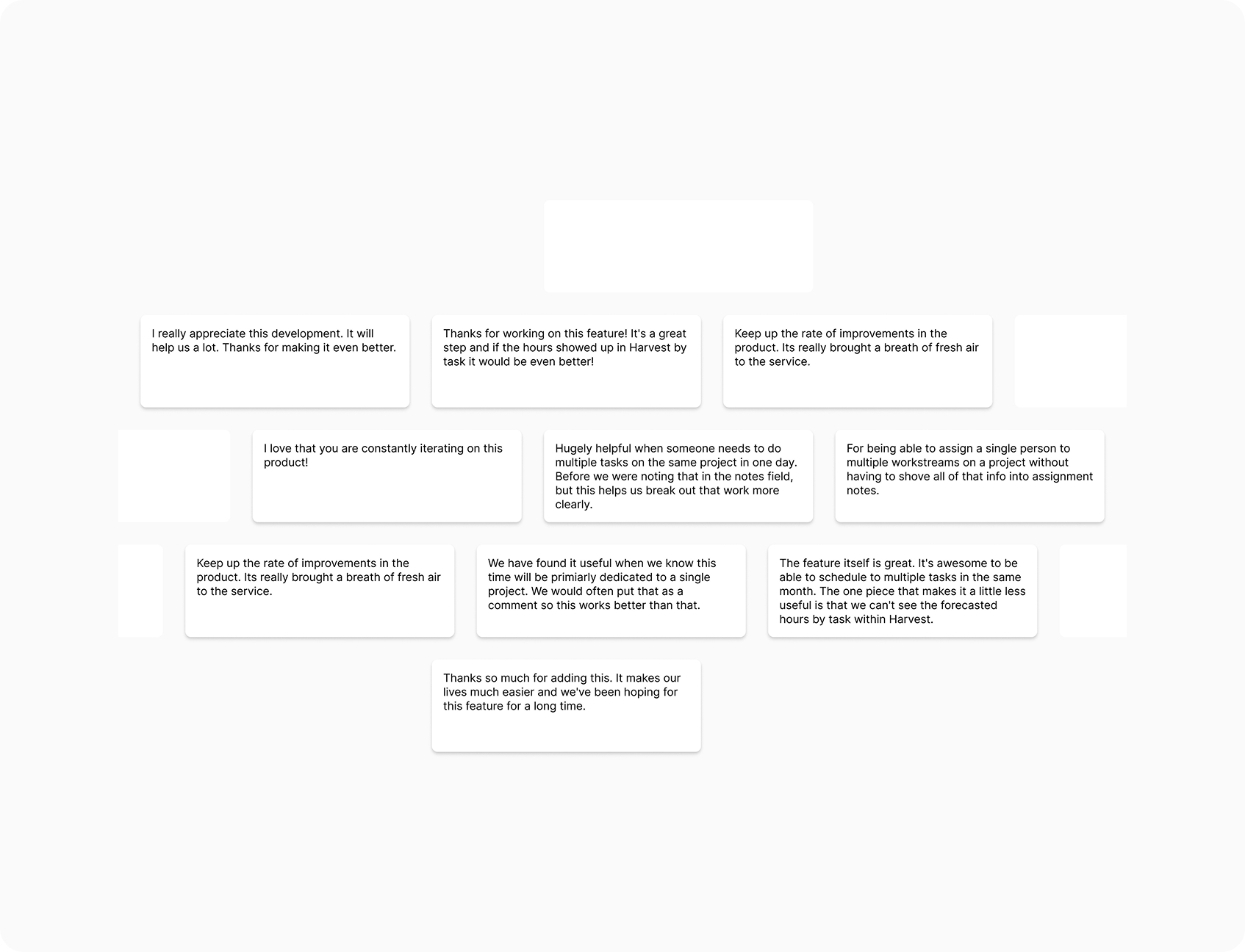
Additionally, the feature unlocked new roadmap possibilities: Task-level budgets and suggested time entries in Harvest. Positive feedback rolled in post-launch, with no increase in support tickets, suggesting the design was intuitive and well-executed.
This project deepened my awareness of how tightly design decisions must align with user requests and success metrics. Because Forecast relied on Harvest's task structure, collaboration with Forecast's development team was crucial to delivering a seamless experience.
I learned to strike a balance between technical constraints and user delight, and became more intentional about using product goals as north stars throughout the design process.